Your cart is empty.
Beaux-Arts Colored Pencils
The Beaux-Arts colored pencils allow for precise color work while maintaining control over drawing. Easy to use and particularly versatile, they accompany both initial artistic explorations and more elaborate creations: illustration, observational drawing, portraits, landscapes, colored sketches, or personal compositions. Unlike simple coloring, drawing with colored pencils allows for a gradual construction of the image. By varying pressure, stroke direction, and layering, it becomes possible to create shades, gradients, shadows, and numerous texture effects.
How to choose colored pencils for artistic drawing?
The choice primarily depends on your practice and the desired outcome. For beginners, a set offering essential colors already allows for experimenting with blends and creating numerous compositions. A broader palette provides more shades readily available and facilitates the work of portraits, landscapes, or detailed illustrations.
The quality of the lead also plays an important role in the drawing experience. A sufficiently soft lead makes it easier to lay down color and layer, while a firmer lead generally allows for greater precision in contours and small details.
Gradients, layering, and blending: working with color differently
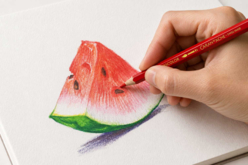
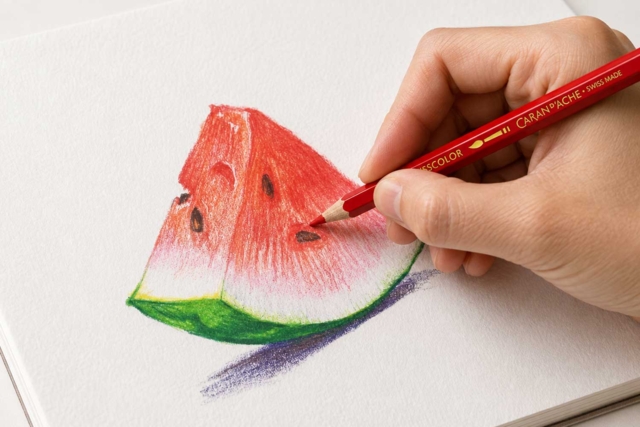
One of the main advantages of colored pencils lies in the ability to gradually build up shades. A light pressure allows for a first transparent layer, and successive passes intensify the color. It is also possible to layer multiple hues to create new shades, work on shadows, or add more depth to a drawing. By varying the pressure applied to the pencil, one can transition from a light color to a much more intense shade. These techniques allow for both flat areas and subtle gradients, making colored pencils a particularly interesting medium for learning to observe volumes, light, and contrasts.
What paper to use with Beaux-Arts colored pencils?
The paper directly influences the rendering of the drawing. A relatively smooth surface facilitates details and precise lines, while a paper with more texture retains pigments more easily and reveals a texture in flat areas. The weight should also be chosen based on the associated techniques. For working exclusively with colored pencils, a drawing paper provides an excellent base. To combine pencils, watercolor, inks, or other techniques in the same creation, a mixed media paper will be preferable. Sketchbooks are practical for making sketches, regularly practicing, or drawing on the go.
Combining colored pencils with other Beaux-Arts techniques
Colored pencils can be used alone or integrated into a composition mixing several mediums. They can, for example, add precise details to a drawing, enhance certain areas after coloring, or complete a work done with other graphic tools. They pair particularly well with graphite pencils to initially construct a sketch, as well as with markers to play with contrasts between flat areas and details. Water-based techniques offer even more possibilities. The combination of drawing and watercolor allows for alternating painted areas and more precise pencil interventions.
Pencils for starting and progressing in drawing
Colored pencils are an excellent entry point into the Beaux-Arts. They require no special preparation or drying time and allow for easy revisiting of work to gradually strengthen colors. Beginners can start by learning to master pressure, hatching, and gradients before exploring blending and layering. With practice, these same techniques allow for finer work on volumes, textures, and light. Portraits, botanical illustrations, animals, landscapes, or abstract drawing: colored pencils offer enough possibilities to support each person's progression and gradually develop their own style.
Completing your drawing materials
To create a complete drawing space, colored pencils can be accompanied by graphite pencils, erasers, sharpeners, and other drawing accessories. Choosing suitable paper or a sketchbook allows for fully enjoying the different hardnesses of leads and coloring techniques. To vary practices, also discover our materials for watercolor, markers, and other Beaux-Arts drawing techniques.
Frequently Asked Questions about Beaux-Arts pencilsWhat is the difference between regular colored pencils and Beaux-Arts pencils?
Ranges designed for artistic drawing particularly seek good pigmentation quality, regular application, and shades that allow for finer work on blends, gradients, and layering. However, the exact characteristics vary according to the pencil ranges.
How to create a beautiful gradient with colored pencils?
Start by applying color with light pressure, then gradually increase the intensity. Several fine passes generally allow for a smoother transition than applying strong pressure from the start.
Can multiple colors be blended with colored pencils?
Yes. Layering allows for the creation of new shades and enriches shadows or volumes. It is preferable to start with light layers to maintain enough possibilities for working on subsequent colors.
What paper to choose for colored pencils?
A drawing paper is suitable for most uses. A smooth paper promotes precision, while a slightly textured paper allows for more play with texture. To combine pencils and wet techniques, prefer a suitable mixed media paper.
1 product
-
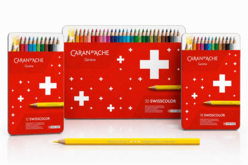
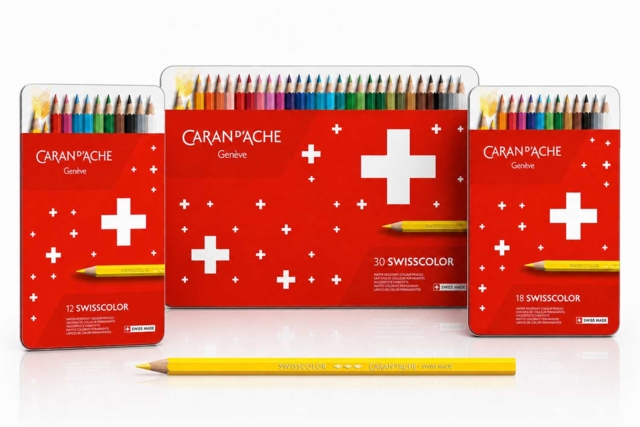
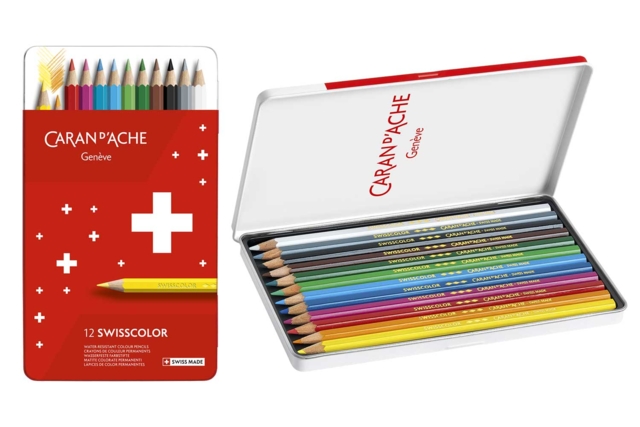
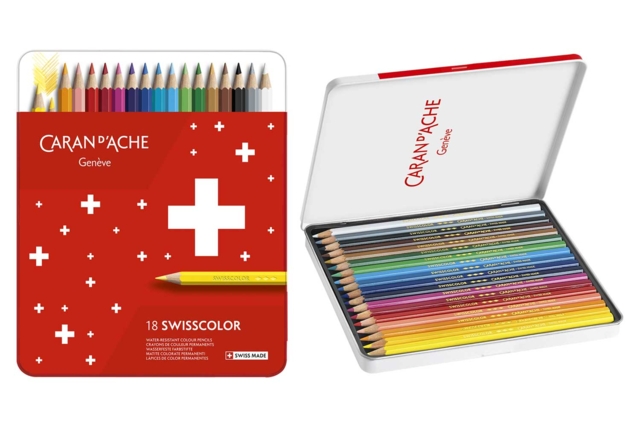
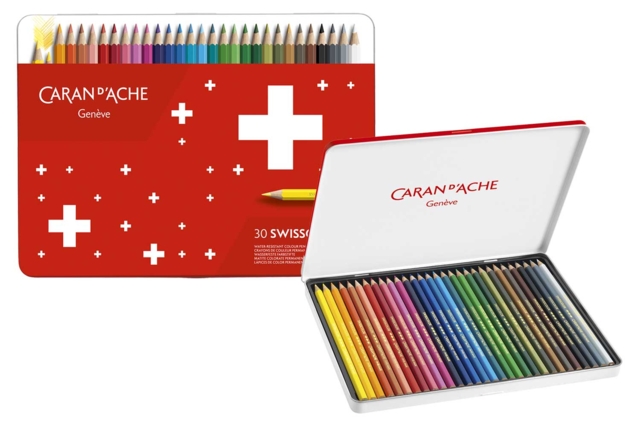
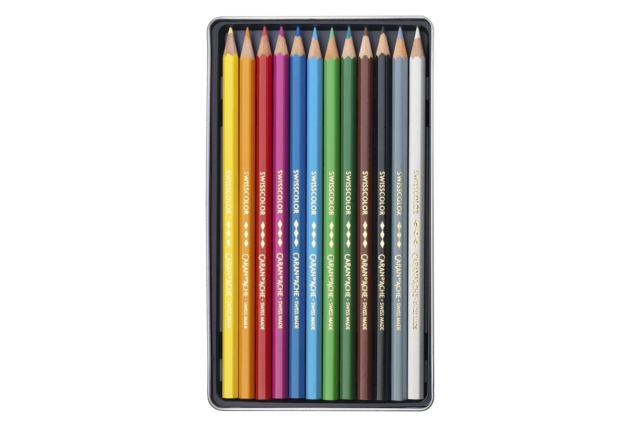
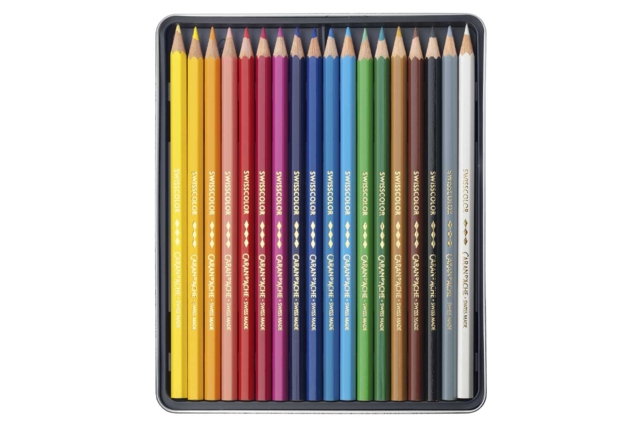
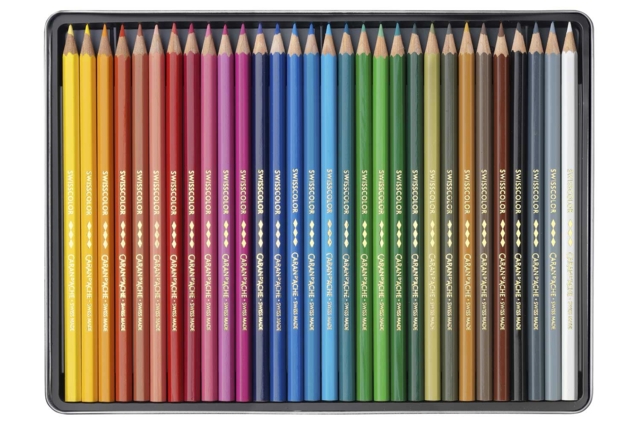
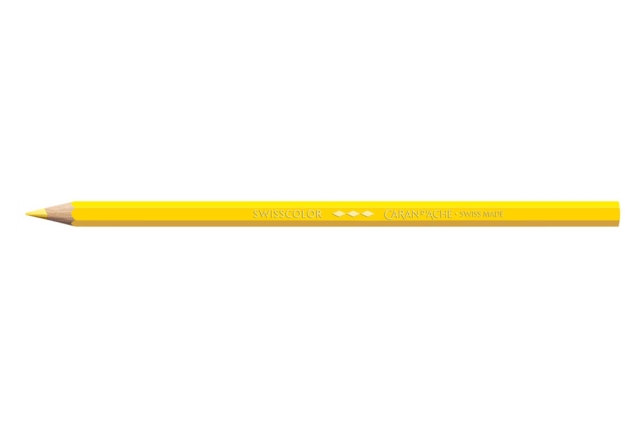
Swisscolor Permanent Colored Pencils
from 18,99€


