Your cart is empty.
Handicrafts with Clocks to Learn the Time
Learning to tell time is an important step in a child's development. Understanding the concept of time, recognizing different times of the day, or visualizing the passage of time requires concrete materials. Handicraft activities with clocks allow these concepts to be approached in a playful and gradual way, combining creation, manipulation, and observation.
Make a Clock to Make Time Concrete
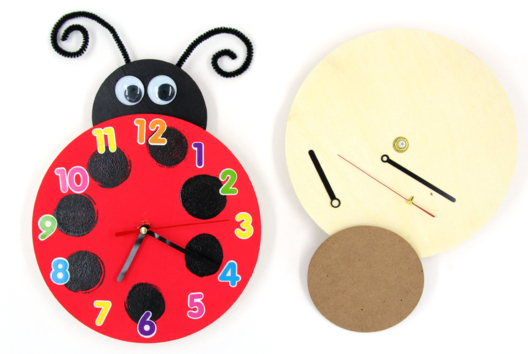
Creating their own clock is an excellent way to introduce the concept of time. By assembling the parts, positioning the hands, and manipulating the clock, children gradually understand the role of each part. Time becomes visible and comprehensible, moving away from an abstract notion. Making a Clock allows for free manipulation, testing, rotating the hands, and observing changes. This approach promotes autonomy and learning through experimentation.
An Educational Tool Particularly Suitable for Preschool
Handicraft activities involving clocks are prominent in our activities for preschool, as they rely on simple and repetitive actions. Even beforelearning to tell time, children learn to navigate the day: morning, afternoon, evening, meal times, or bedtime. For younger children, you will find tutorials suitable for children under 3. At this age, the clock becomes primarily a visual and playful tool. Colors, shapes, and images help associate a part of the day with a clock hand's position, without pressure or performance goals.
Decorate and Personalize Your Clock to Make It Your Own
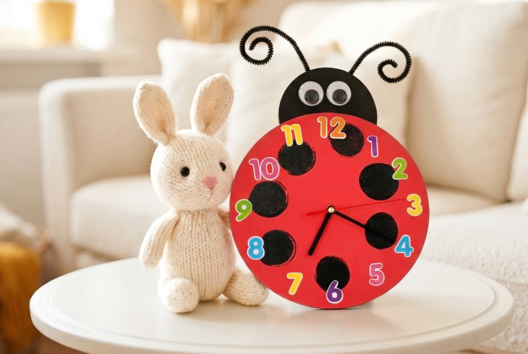
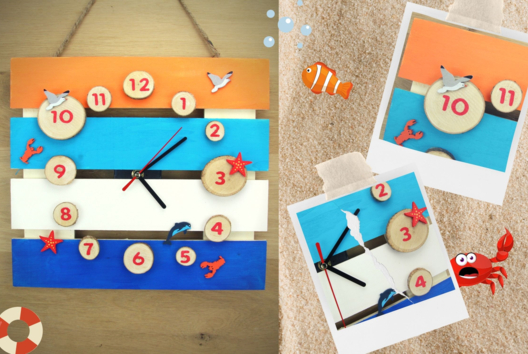
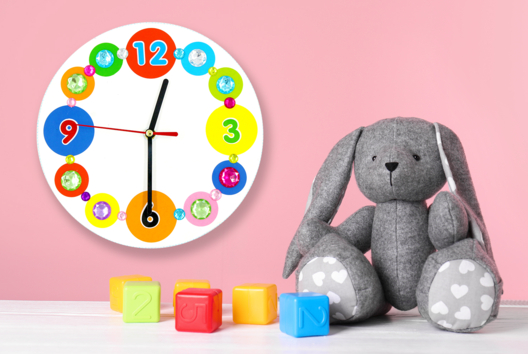
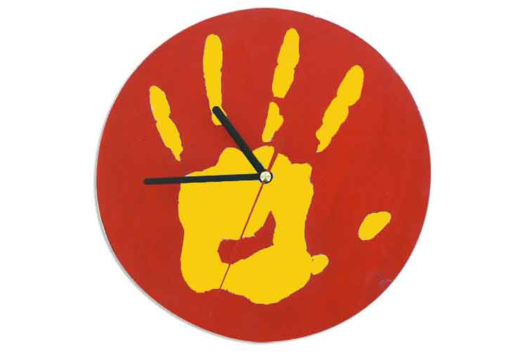
The creative aspect plays an essential role in these activities. Decorating your clock with paint, stickers, and personalizing wooden clocks allows children to make the object their own. A personalized clock becomes a familiar tool that children enjoy using. Visual themes, such as animals or shapes and colors, make the clock more appealing and facilitate children's engagement, especially in preschool.
Understand the Cycles of Time Through the Seasons
Learning to tell time can be complemented by a broader approach to time, linked to the seasons. Observing changes throughout the year helps children understand that time is also organized in cycles. To approach this concept with children, discover our spring-summer activities, our autumn tutorials, and winter crafts. These activities act as touchpoints that help structure the notion of duration and better situate events in time. Linking clock activities to the seasons enriches the learning by connecting the time of day to the time that passes throughout the year.
An Educational Approach Inspired by Montessori Pedagogy
Our creative activities with clocks align with a pedagogical approach close to the spirit of Montessori activities, where children learn through manipulation and experimentation. The clock becomes a self-learning tool that they can use alone or with guidance, taking the time to observe and understand. The adult remains a guide, who accompanies, explains, and values discoveries without imposing a pace or outcome.
4 DIY tutorials